Whoa! This caught me off guard the first time. I was fiddling with a dozen wallets, and something felt off about the UX vs. security trade-offs. My instinct said: wallets that feel slick sometimes hide bad defaults. Seriously? Yes—often. Here’s the thing. A DeFi browser extension is both convenience and risk. You get speed. You also give an extension broad power over your on-page interactions, and that tension is where most users get burned.
Okay, so check this out—Rabby’s approach mixes practical safety features with a pretty usable interface. At first glance it’s a tidy, responsive extension. Then you notice the little controls that matter: granular approval flows, per-site approvals, and pre-execution checks. Initially I thought «it’s just another wallet skin,» but then realized their transaction simulation and approval gating actually change behavior—both mine and the extension’s. On one hand that feels overbearing to some users. Though actually, for active DeFi traders, those extra steps cut down accidental approvals. I’m biased, but I prefer deliberate friction to surprising losses.
Short story: Rabby aims to shift risk from the user to a layered defense model. It’s not perfect. It won’t stop every phishing page, and it won’t fix user habits. But it does reduce attack surface in ways that matter for everyday DeFi interactions. Hmm… there are tradeoffs. I want to be upfront about those.
Practical security wins you actually use
First, transaction simulations. Wow! Seeing potential slippage, token path, and call data before signing matters. It’s a small UX layer, but it changes decisions. On the analytical side, simulations let you catch malicious contracts or weird approval amounts. Initially I thought simulations would be slow or noisy. Actually, wait—let me rephrase that—Rabby makes them fast enough that I use them as a reflex. My reflex used to be «approve, move on.» Now it’s «peek, approve if clean.»
Next, permissions control. Rabby encourages per-site whitelisting so a random site can’t batch-approve transfers. This is very very important. On one hand, blanket approvals are convenient. On the other, they are dangerous—especially when using farms and aggregators. On the technical side, limiting allowances and using EIP-2612 style permits where possible reduces repeated approvals.
Hardware wallet support is another plus. If you’re trading meaningful amounts, never keep keys in a single soft wallet alone. Use a hardware device. Rabby supports integrating Ledger and similar devices, so your signing keys remain offline even while the extension mediates the flow. I’m not 100% sure about every model’s integration quirks, but in my hands it’s stable for common flows.
Another thing I like: domain isolation. You’ll see clearly which site is requesting the signature. That sounds trivial, but in phishing attacks, tiny cues can be decisive. The extension surfaces uncommon contract methods, flagged token approvals, and even suggests minimum amounts when approvals are suspicious. These are practical nudges, not just warnings.
One caveat. Some features require trust in the extension’s update model. Browser extensions have privileged update channels. So, governance around updates and open-source auditing matter. Rabby publishes code and has engaged with audits; yet you should always double-check releases and community notes. Somethin’ about auto-updates still bugs me—manual review is ideal for power users.
Day-to-day usability for DeFi users
Rabby’s UI is crisp. Transactions are grouped and labeled logically. Wallet switching between multiple accounts is painless, which matters if you maintain several wallets for different strategies. I run a cold stash, a trading account, and a side-hustle deployer. The extension handles that mix smoothly. There’s also built-in transaction memos and tags—small conveniences that add up when you’re tracking operations across chains.
Performance is solid. No laggy pop-ups or stalled approvals in my testing. Oh—and the alerts. The extension notifies when an allowance is high or when a new contract is called frequently. These micro-alerts teach better habits. They’re like having a cautious buddy over your shoulder, saying «hold on»—in a polite way.
Still, the extension ecosystem is messy. Browser permissions can be fiddly across Chrome, Brave, and Firefox. On some browsers, permission prompts are more intrusive or inconsistent. On some websites, pop-up blockers and CSP rules can block dialogs. So yes—expect some friction now and then. It’s normal. It doesn’t break anything, but it does slow flow, which is sometimes necessary.
How to use Rabby wisely—my checklist
– Use a hardware wallet for large balances.
– Limit token allowances; set them small and refresh when needed.
– Enable transaction simulation and always glance at the call data.
– Keep one browser profile for DeFi and another for general browsing—segmentation helps.
– Follow updates and audit reports; don’t rely on defaults forever.
Honestly, those steps are basic, but people skip them. People forget. I do too… sometimes. The point is to build habits that the extension supports, not one that tries to do everything for you.
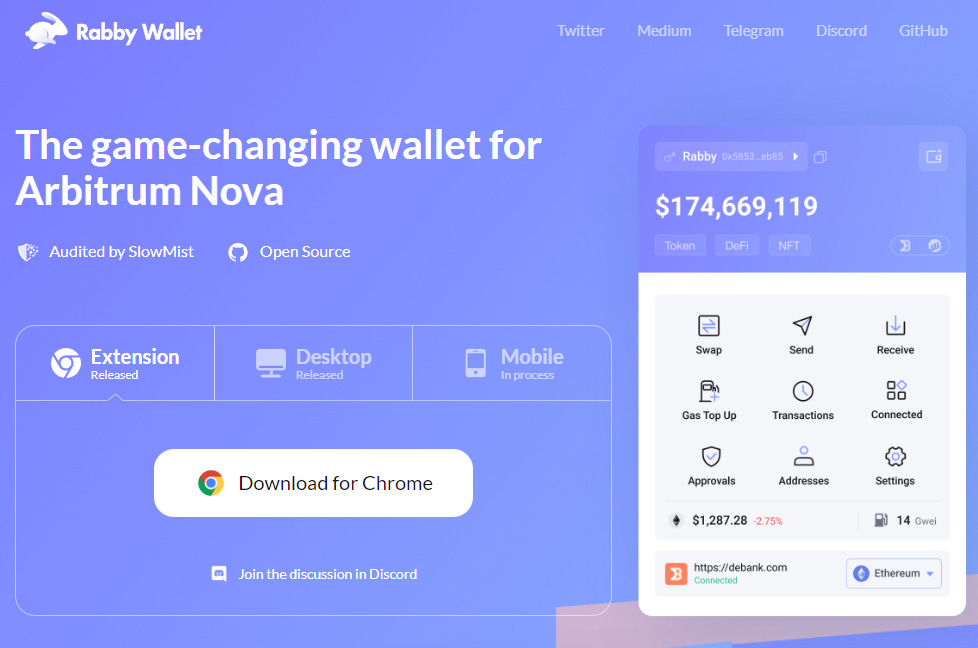
For readers ready to try Rabby, there’s an official download page that I used while testing: rabby wallet download. Don’t paste seed phrases anywhere. Ever. No exceptions. Even if the extension asks—you should still double-check. And yeah, backups. Paper and encrypted backups. Redundancy matters.
FAQ
Is Rabby safer than MetaMask?
Depends on how you use them. Rabby emphasizes permission granularity and transaction simulation, which nudges users toward safer behaviors. MetaMask is ubiquitous and battle-tested, but many users rely on blanket approvals that increase risk. On the other hand, ecosystem support and integrations vary; choose the tool that matches your risk profile and operational habits.
Can Rabby prevent phishing?
No extension can stop all phishing. What Rabby does is reduce mistakes by flagging suspicious approvals and making transaction intent clearer. Combine it with browser hygiene, separate browsing profiles, and hardware wallets to minimize compromise risk.
No responses yet